
LED Amusement Lights vs Traditional Incandescent: Cost & Performance Breakdown
- date: 2026-09-15
- category: Industry knowledge
- click:
For decades, amusement park rides sparkled with traditional incandescent bulbs — warm, familiar, and cheap to buy. But cheap to buy is not cheap to own. The shift to LED amusement lights is not just about environmental responsibility; it is a straightforward financial decision with a measurable return on investment. Here is the complete breakdown.
|
|
The Case for Incandescent: Why It Lasted So Long
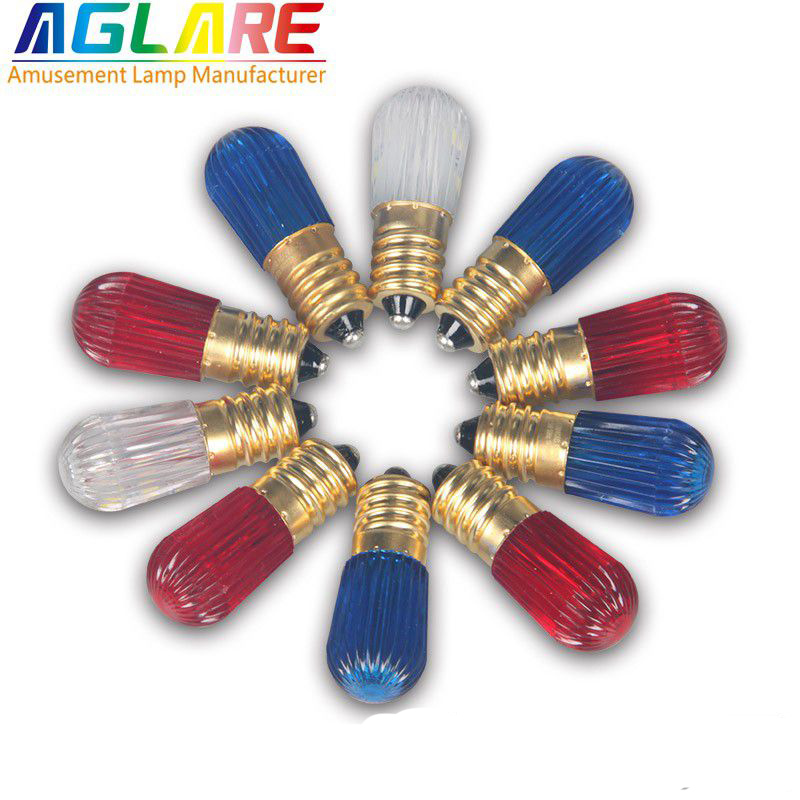
Traditional incandescent fairground bulbs (E10, E14 bases, AC24V) have several genuine advantages that kept them in use long after LED technology arrived:
⦁ Colour quality: Incandescent produces a warm, continuous-spectrum light (CRI ≈ 100) with a natural color appearance
⦁ Low upfront cost: A standard E14 incandescent fairground bulb costs $0.10–$0.30
⦁ Simplicity: No driver, no IC chip, no compatibility concerns
⦁ Dimming: Works with any triac dimmer without flicker
These advantages made incandescent the default choice for ride operators who replaced bulbs frequently anyway as part of routine maintenance.
Why the Economics Have Flipped
Energy Consumption
Bulb Type | Wattage | Lumens | Lumens/Watt |
Incandescent E14 fairground | 5W–15W | 100–200 lm | 15–20 lm/W |
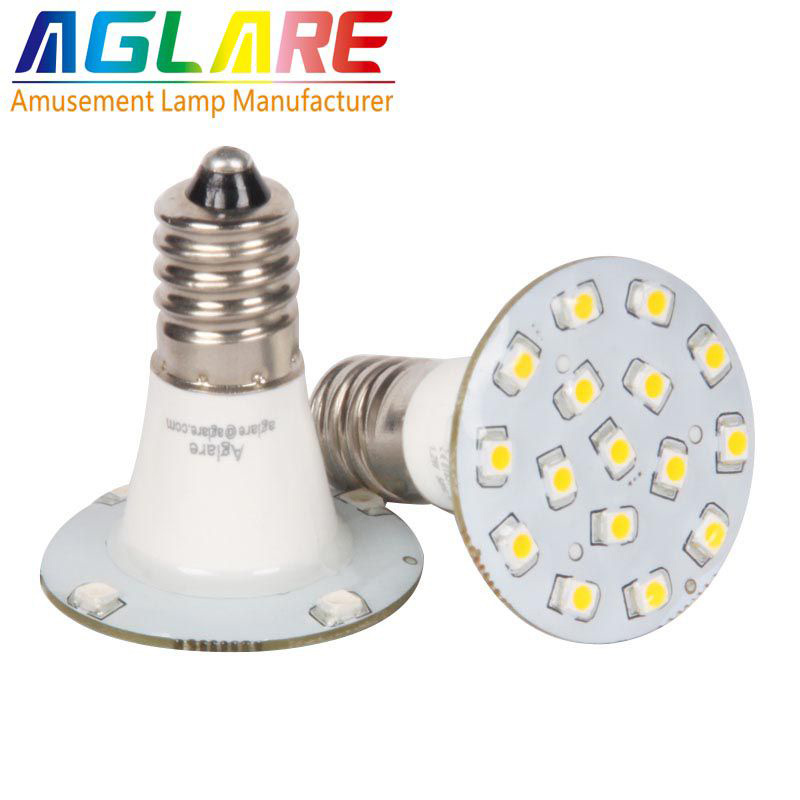
LED E14 pixel light (6th gen) | 0.3W–0.5W | 40–80 lm | 100–160 lm/W |
A ride with 500 incandescent bulbs at 10W each draws 5,000W (5kW). Replace with 0.5W LED pixel lights and the load drops to 250W — a 95% reduction in energy cost for the lighting circuit.
Lifespan Comparison
Bulb Type | Rated Lifespan | Failures per Season (500 bulbs) | Annual Replacement Cost* |
Incandescent | 1,000–2,000 hours | 50–150 bulbs | $25–$75 (bulbs) + labor |
LED (wire-bond) | 15,000–25,000 hours | 5–15 bulbs | $15–$45 (bulbs) + labor |
LED (COB flip-chip) | 40,000–60,000 hours | 0–3 bulbs | $3–$10 (bulbs) + minimal labor |
*Assuming 8-hour operating day, 200-day season = 1,600 hours/season
Labor Cost for Maintenance
Bulb replacement on an amusement ride is not a trivial task. Access to mounted bulbs on a carousel or Ferris wheel may require scaffolding, safety harnesses, or ride downtime during peak operating hours. Estimating conservatively at $20/hour labor and 2 minutes per bulb:
⦁ 100 bulb replacements × 2 min = 3.3 hours labor = $66/year for incandescent
⦁ 5 bulb replacements × 2 min = 0.17 hours labor = $3.30/year for LED
Total Cost of Ownership: 5-Year Calculation (500 Bulbs)
Cost Category | Incandescent | LED (COB Flip-Chip) |
Initial bulb cost | $100 | $800 |
Energy (5 yr, $0.12/kWh, 8hr/day, 200 days/yr) | $6,000 | $300 |
Replacement bulbs (5 yr) | $375 | $50 |
Labor for replacements (5 yr) | $330 | $17 |
Total 5-year cost | $6,805 | $1,167 |
LED saves $5,638 over five years on a single ride. Payback on the higher upfront LED cost occurs within approximately 3 months.
Performance Advantages Beyond Cost
Visual Impact
Modern 6th-generation RGB pixel lights do something incandescent simply cannot: they change color dynamically. A ride running synchronized color-chasing patterns across 500 pixel lights creates a visual spectacle that draws crowds and increases dwell time. Static-color or slow-fade incandescent bulbs cannot compete.
Heat Output
A 500-bulb incandescent installation generates approximately 4,750W of waste heat. This increases ambient temperature around the ride, potentially affecting passenger comfort and requiring additional cooling for enclosed rides. LED generates approximately 200W of waste heat — a 98% reduction.
Safety
Lower operating temperature means reduced burn risk for maintenance technicians and passengers who might contact the bulb housing. Lower current draw reduces wiring stress and fire risk.
The Transition: What to Watch For
When converting a ride from incandescent to LED, verify:
1.Transformer compatibility: Some older ride transformers are designed for higher current loads and may not regulate correctly at the lower LED draw
2.Dimmer compatibility: If you use a dimmer, ensure it is compatible with LED loads (TRIAC dimmers designed for incandescent can cause flicker or damage LED drivers)
3.Color matching: If converting partially (some sections at a time), match the color temperature and saturation of LED lights to the remaining incandescent sections